

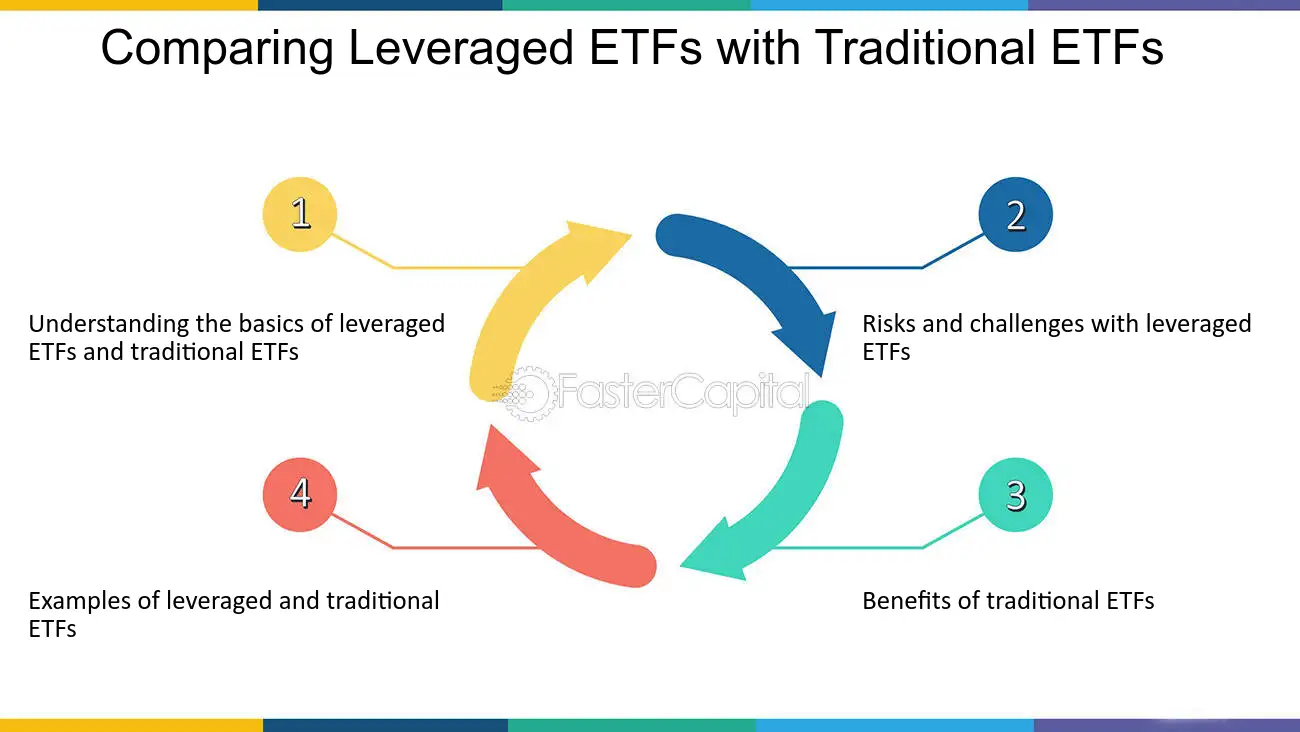
When it comes to exchange-traded funds (ETFs), both traditional and leveraged options offer unique benefits and risks. Traditional ETFs provide steady, long-term growth, while leveraged ETFs aim to amplify short-term gains using borrowed capital. Understanding the differences between these two types is essential for aligning your investment strategy with your financial goals. In this guide, we’ll conduct a comparative analysis of leverage vs. traditional ETFs to help you make informed decisions. Engage with magnumator.org/ to dissect the differences between leveraged and traditional ETFs in the investment landscape.
Differences in Structure and Functionality
Leveraged ETFs and traditional ETFs are similar on the surface, but they function quite differently. At their core, both are baskets of securities that track an index, commodity, or sector.
However, leveraged ETFs go a step further by attempting to multiply the daily returns of the underlying asset—often by two or three times. Traditional ETFs simply track the asset’s price changes without any amplification.
A key difference lies in how they achieve these returns. While traditional ETFs hold the actual assets like stocks or bonds, leveraged ETFs use derivatives—such as swaps, options, and futures—to create leverage.
Think of traditional ETFs as a slow but steady train, while leveraged ETFs are more like a high-speed car—both get you to your destination, but one does it with much more speed (and risk).
Another difference is in their investment horizon. Traditional ETFs are generally seen as long-term investment vehicles. People buy them and hold on, often for years. Leveraged ETFs, on the other hand, are designed for short-term, daily moves. Holding them for an extended period can lead to returns that don’t exactly match the original goal due to daily rebalancing.
So, which is right for you? If you’re looking for steady, long-term growth, traditional ETFs are probably the safer bet. But if you’re an active trader with a higher risk appetite and you’re watching the market closely, leveraged ETFs can offer greater potential rewards—at the expense of greater risk.
Why are Derivatives Central to Leveraged ETFs but Not Traditional Ones?
The magic of leveraged ETFs lies in their ability to amplify returns. But they don’t achieve this by simply buying more of the underlying asset. Instead, they rely heavily on derivatives like swaps, options, and futures.
These tools allow the fund to “borrow” performance from the market, giving it the leverage needed to magnify gains. Traditional ETFs don’t need to use these financial instruments because they are just tracking the asset directly.
Here’s a quick comparison: Traditional ETFs are like buying a stake in a company or sector—you own a piece of the pie, plain and simple. Leveraged ETFs are more like borrowing a rocket to see if you can shoot to the moon—but you’ll crash harder if the market turns against you.
In simpler terms, derivatives are the turbo boost that powers leveraged ETFs. They allow the fund to achieve its target multiple (say, 2x or 3x) of the index or asset it’s tracking.
While derivatives offer the chance for big gains, they also introduce complexity and risk. Since they don’t directly own the underlying asset, leveraged ETFs depend on these contracts to perform as expected. If the derivatives don’t work as intended or there’s a pricing error, the results can differ from what investors anticipated.
So why don’t traditional ETFs use them? They don’t need to. Their goal is to simply mirror the performance of the asset, not amplify it. For the average investor, traditional ETFs offer simplicity and lower risk.
But if you’re after bigger moves and are comfortable with more risk, leveraged ETFs and their derivative-powered approach might be worth exploring. Just make sure you’re fully aware of the risks.
Volatility Decay and Compounding Effects in Leveraged ETFs
Volatility decay is one of those tricky aspects of leveraged ETFs that can trip up even experienced traders. It’s like a hidden fee that eats away at your returns over time, and it’s caused by the daily resetting nature of these funds.
Leveraged ETFs aim to deliver multiples of the daily performance of an index or asset, not over long periods. This daily reset creates a compounding effect, and when volatility is high, the value can erode even if the underlying index stays flat.
Think of it this way: if you invest in a 2x leveraged ETF, and the index goes up 10% on day one, your ETF would theoretically go up 20%. Great, right? But if the index falls by 10% the next day, your ETF won’t just drop by 20%—because of the compounding effect, the losses can be more pronounced. Over time, as the ETF resets each day, this can lead to what’s called “volatility decay.”
The higher the market swings, the more pronounced this decay can become. So, even if the index doesn’t move much over a week or a month, the leveraged ETF might show a different story due to daily compounding. That’s why leveraged ETFs are typically best suited for short-term trades rather than long-term holding.
Are you aware of this hidden risk? Many investors aren’t. While these funds can be exciting for day traders looking for quick profits, they can be dangerous for those who don’t fully understand how volatility decay works.
If you’re considering holding a leveraged ETF for more than a day or two, it’s important to carefully monitor the market and consider the compounding effect before making any decisions. It’s always wise to talk to a financial expert to see if leveraged ETFs fit your risk tolerance.
Conclusion:
Choosing between traditional and leveraged ETFs depends on your investment objectives and risk tolerance. Traditional ETFs offer stability for long-term growth, while leveraged ETFs present higher risk and reward for short-term speculation. By understanding the distinct characteristics of each, you can better align your portfolio with your financial goals, ensuring a balanced approach to risk management and potential returns.