

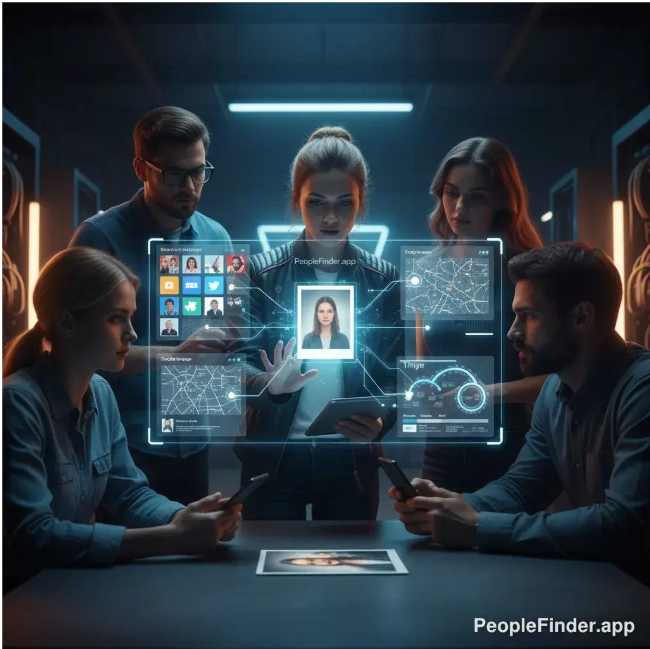
A growing category of consumer technology is giving ordinary people access to identity verification capabilities that were once restricted to law enforcement and large corporations. AI-powered face search tools can now determine whether an online profile is genuine in less time than it takes to read this paragraph.
The technology works by analyzing the geometry of a human face — the unique spatial relationships between features like eyes, nose, jawline, and mouth — and comparing it against millions of publicly indexed images across the internet. Unlike traditional reverse image search, which only finds identical copies of the same photo, face search identifies the same person across different photos, angles, and conditions.
The practical implications are significant for everyday online interactions.
How It Works
The process is simple enough for anyone with a smartphone.
Step 1: Take a screenshot or save a photo of the person you want to verify. This could be from a dating app profile, a LinkedIn connection request, an email signature, or any other source.
Step 2: Upload the photo to an AI face search platform. Several options exist, including identity verification tools like PeopleFinder.app, which processes searches in approximately 10 seconds.
Step 3: Review the results. The platform shows every publicly available instance of that face online, including social media profiles, news articles, professional directories, and public databases.
Step 4: Cross-reference. Do the results match what the person told you? Same name, same location, same profession? Consistency across multiple platforms suggests a genuine identity. Contradictions suggest further investigation is warranted.
Who Is Using This Technology
The user base spans a broader range than might be expected.
Online daters represent the largest single group. With romance scams causing billions in annual losses, pre-date identity checks are becoming standard practice for safety-conscious users.
Parents use the technology to verify people communicating with their children through online gaming, social media, and messaging platforms.
Small business owners verify freelancers, contractors, and new business contacts — particularly when transactions involve significant money and limited prior relationship.
Renters check landlord identities before wiring security deposits, a precaution prompted by the rise of rental scams using fake property listings.
Job seekers verify the identities of recruiters contacting them through email and LinkedIn, protecting against employment scams that harvest personal information under the pretense of hiring.
The Technology Gap This Fills
Traditional identity verification requires official documents — passports, driver’s licenses, utility bills. This works for institutional contexts like banking or border control but is impractical for everyday situations. You cannot ask your Tinder match to send a copy of their passport before a first date.
Social media verification (blue checkmarks and similar features) confirms that an account belongs to a specific entity but is limited to participating platforms and generally available only to public figures or paying subscribers.
AI face search occupies the space between these extremes — more thorough than a Google search, more accessible than institutional verification, and more comprehensive than platform-specific badges.
Privacy Considerations
The technology searches only publicly available images — photos that individuals have posted on public social media profiles, websites, and platforms. It does not access private accounts, encrypted messages, or restricted databases.
Users should be aware that searching publicly available information is generally legal, but laws vary by jurisdiction. The technology should be used for legitimate safety and verification purposes, not for harassment or stalking.
The Shift in Online Trust
The availability of consumer-grade identity verification represents a broader shift in how trust operates online. The default assumption on the internet has historically been anonymity — people can present themselves however they choose, and verification is optional.
That default is changing. As verification tools become more accessible and awareness of online fraud increases, a new expectation is emerging: legitimate people are verifiable, and unverifiable people warrant caution.
This shift benefits honest participants in online interactions while raising the cost and difficulty of fraud. It does not eliminate deception, but it does provide individuals with the tools to protect themselves — tools that, until recently, simply did not exist in an accessible form.
Frequently Asked Questions
Can I verify someone’s identity with just a photo? Yes. AI face search tools analyze a photo to find all publicly available instances of that face online. This reveals whether the person has a consistent identity across platforms or if their photo appears under multiple different names.
How accurate is AI face search? Modern systems achieve accuracy rates above 95% in standard conditions. Accuracy can decrease with very low-quality images or photos where the face is partially obscured.
Is it legal to search someone’s face online? Searching publicly available images is legal in most jurisdictions. However, biometric privacy laws vary by region. The technology should be used for legitimate verification and safety purposes.