

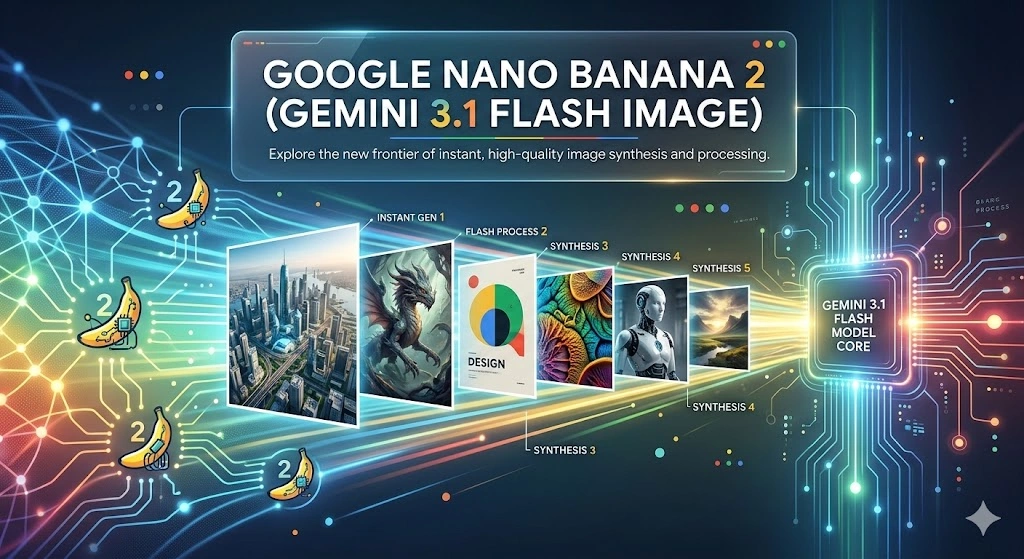
The novelty of generative AI has largely worn off for agency teams. In the early days, a “good” result was defined by its visual fidelity—how realistic the skin textures looked or how complex the lighting was. Today, those benchmarks are baseline. For an agency responsible for delivering a multi-channel campaign, the definition of a “good” result has shifted toward predictability, editability, and brand safety.
The primary friction point in creative production isn’t a lack of imagination; it’s the high cost of the “randomness tax.” If a tool generates a stunning hero image but cannot reproduce the same character in a different pose or a slightly different lighting setup, it remains a toy, not a production asset. This is where systems like Nano Banana Pro are beginning to differentiate themselves. By moving away from the “slot machine” style of prompting toward a more deliberate canvas-based workflow, teams can start to treat AI as a high-speed assistant rather than an unpredictable artist.
The Shift from Prompting to Direction
Most entry-level AI tools rely entirely on text prompts. For a creative director, this is a nightmare. Language is imprecise. One person’s “cinematic lighting” is another person’s “overexposed neon.” When you are building assets for a client, you need more levers than just adjectives.
Within the AI Image Editor environment, the workflow changes from guessing words to manipulating spatial data. The use of image-to-image (img2img) capabilities allows a team to provide a rough sketch or a low-fidelity 3D render as a structural guide. This ensures that the composition—the most expensive part of a layout to change later—stays fixed while the AI handles the texture, lighting, and detail.
Using Nano Banana Pro in this capacity allows agencies to bypass the hundreds of iterations usually required to get a character’s posture or a product’s placement “just right.” When the geometry is locked in by a reference image, the AI spends its “compute” on the aesthetics, which is what it does best.
Consistency and the Mid-Flight Correction
One of the greatest challenges in AI production is the “all-or-nothing” nature of many generators. If 90% of an image is perfect but the hand is distorted or a background element is distracting, many tools force you to re-roll the entire image, losing the 90% you liked.
A production-savvy approach requires an iterative loop. This is where the Banana Pro ecosystem provides a significant advantage. Instead of starting over, teams use the AI Image Editor to perform in-painting or localized edits. This mirrors the traditional Photoshop workflow but at a significantly higher speed.
It is important to be realistic here: current AI models still struggle with precise anatomical details and specific text rendering in complex environments. Expecting any tool, including Banana AI, to get every finger and every letter right on the first pass is a recipe for missed deadlines. The difference in a professional workflow is whether the tool allows you to fix those errors without destroying the rest of the composition.
 Managing Technical Debt in Creative Assets
When an agency builds a campaign, they aren’t just making one image. They are making a system of assets: social headers, display ads, print-ready vertical banners, and perhaps a 15-second video bumper.
If these assets are generated using different models or disconnected workflows, the “visual drift” becomes apparent. The blue in the background of the video won’t match the blue in the static ad. The Nano Banana framework addresses this through centralized model usage. By keeping the generation within the same model family—such as Seedance 2.0 or Seedream 5.0—the underlying “DNA” of the images remains consistent.
However, there is an inherent limitation in generative technology that teams must account for: color space management. Most generative models operate in RGB and lack the sophisticated color management of high-end design software. For print-heavy campaigns, there is still a mandatory post-production step to ensure that the vibrant “Banana Pro” yellow generated on screen translates correctly to CMYK for physical media.
The Role of Workflow Studio in Client Delivery
Efficiency in an agency setting is often measured by the time between a client request and the first “meaningful” draft. Generic tools often lead to a “black box” problem where the creative team cannot explain why the AI produced a certain result.
The introduction of the Workflow Studio within the Banana AI suite suggests a move toward a more modular approach. By breaking down the generation process into stages—structural layout, stylistic overlay, and final upscaling—leads can audit the process. If a client likes the layout but hates the “vibe,” the team only has to adjust the style layer rather than re-inventing the entire asset.
This modularity is essential for scaling. In a traditional setup, if a junior designer leaves a project, picking up their work can be difficult. In a structured AI workflow, the parameters (the “seed,” the reference images, and the specific Nano Banana settings) provide a roadmap that any other team member can follow.
Expectation Management: The Human Element
There is a common misconception that tools like Nano Banana will replace the need for art directors. In practice, the opposite is happening. Because the volume of output has increased, the need for a discerning “human in the loop” has never been higher.
AI can generate a thousand variations of a concept in an hour, but it cannot tell you which one aligns with the client’s brand values or which one will resonate with a specific demographic in a specific region. The “operator-led” philosophy means the designer acts more like a curator and a refiner.
We must also acknowledge the uncertainty regarding deep integration. While the browser-based tools are powerful, they often sit outside the primary design stack (Adobe CC, Figma, etc.). This means there is still a “manual bridge” where assets must be exported, imported, and formatted. Until these AI pipelines become native plugins, there will always be a slight friction in the production speed.
Practical Implementation: A Tactical Guide
For agencies looking to integrate these tools, the transition should be incremental.
- Concepting with Nano Banana: Use the high-speed generation of the base models to explore broad visual directions. This is the “blue sky” phase where randomness is an asset, not a liability.
- Locking the Geometry: Once a direction is chosen, use the image-to-image features to lock in the composition. This prevents the “jumping” effect where elements move around between different versions of the same idea.
- Refinement via AI Image Editor: Use the canvas tools to clean up the details. This is where you address the “AI artifacts” that might signal a lack of professionalism to a client.
- Final Polish: Move the asset into traditional software for typography, brand logos, and color grading.
By treating the AI as a “mid-process” power tool rather than a “start-to-finish” solution, agencies maintain the quality control that clients pay for.
The Future of Production-Grade AI
The industry is moving away from the era of “look what the AI can do” and into the era of “look what I can do with AI.” The distinction is subtle but vital. Tools that prioritize control over pure “magic” will be the ones that survive in a professional environment.
The Banana Pro ecosystem is positioned for this shift because it focuses on the “unsexy” parts of creation: consistency, localized editing, and workflow repeatability. Whether you are using the Nano Banana Pro model for a specific aesthetic or the wider suite of video generation tools, the goal remains the same: reduce the time between the idea and the deliverable while maintaining the highest possible quality floor.
Ultimately, the goal for any agency is to become “tool-agnostic” but “workflow-dependent.” You want a system where the output is so predictable and high-quality that the specific tool used becomes secondary to the creative vision. As these platforms evolve, the gap between a digital sketch and a final campaign asset will continue to shrink, but the requirement for professional oversight, strategic thinking, and rigorous quality control will remain the anchor of any successful creative shop.