

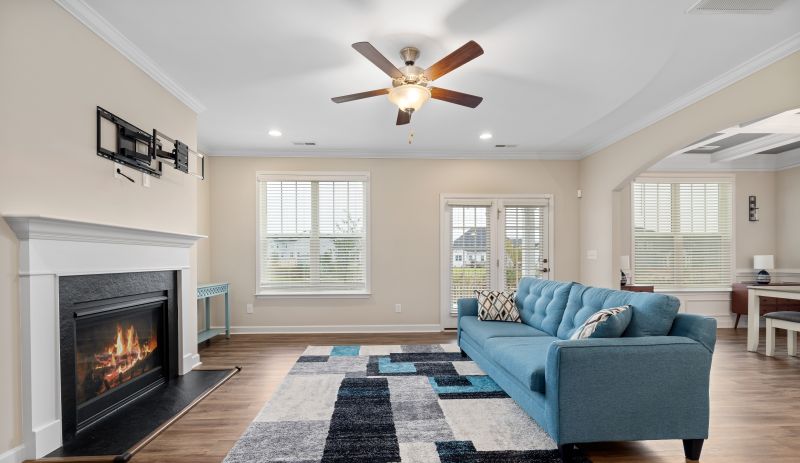
You likely don’t give your ceiling fan much thought until summer comes and when your electricity costs increase and cause hassle.
In 2026, selecting the appropriate ceiling fan goes beyond simply choosing a style that complements your ceiling. Modern fans are more intelligent and energy-efficient and precisely designed for various lifestyles and room styles. With so many online and offline options available, it’s surprisingly simple to select the wrong option.
But before you make your purchase of ceiling fans for your space, here’s a straightforward guide that clarifies what truly counts.
Why Choosing the Right Ceiling Fan Matters More in 2026
A ceiling fan is one of the few appliances you use almost every day. But in most Indian homes, it runs for 8–16 hours daily. That means the wrong fan can quietly increase your power bills or wear out faster than expected.
Modern buyers are now looking for:
- Better air delivery
- Lower electricity consumption
- Silent operation
- Smart controls
- Longer durability
- Stylish designs that match interiors
And you know what’s the good news? Brands now have improved dramatically in all these areas. The challenge is knowing which features are worth paying for and which are just marketing buzzwords.
1. Check the Fan Size First, Not Just the Design
One of the biggest mistakes people make when they buy ceiling fans is choosing the wrong size.
A fan that’s too small won’t circulate enough air. Too large, and the airflow can feel uncomfortable in compact rooms.
Recommended Ceiling Fan Sizes
| Room Size | Ideal Fan Sweep Size |
| Small bedroom/study | 600–900 mm |
| Standard bedroom | 1200 mm |
| Living room | 1400 mm |
| Large halls/open areas | Multiple fans or HVLS fans |
2. Energy Efficiency Is Non-Negotiable in 2026
Electricity costs are rising, and older fans consume far more power than modern energy-efficient models.
Today, BLDC fans are becoming the preferred choice.
What Is a BLDC Ceiling Fan?
BLDC stands for Brushless Direct Current motor technology. These fans consume significantly less electricity compared to conventional induction fans.
A regular fan may consume:
- 70–80 watts
A BLDC ceiling fan may consume:
- 26–35 watts
That difference adds up over time.
Why BLDC Fans Are Worth Considering
- Lower electricity bills
- Inverter-friendly during power cuts
- Quieter performance
- Longer motor life
- Better speed consistency
For homes where fans run all day, this upgrade genuinely makes financial sense.
3. Air Delivery Matters More Than Speed
A common misconception is that higher RPM means better cooling.
Not always.
What actually matters is air delivery, usually measured in CMM (Cubic Metres per Minute).
A fan can spin fast but still provide poor airflow if the blade design is inefficient.
What to Look For
For a standard room:
- Look for airflow between 210–250 CMM
Good airflow creates actual comfort, especially in humid climates.
4. Noise Levels Can Change Your Entire Experience
Many people ignore this until after installation.
A noisy ceiling fan becomes frustrating over time, especially in:
- Bedrooms
- Home offices
- Study rooms
- Nurseries
Signs of a Quiet Ceiling Fan
- BLDC motor technology
- Aerodynamic blades
- Strong balancing
- Premium bearings
If possible, watch real-user demo videos before buying online. Reviews often reveal issues that spec sheets don’t.
5. Don’t Ignore Build Quality
A fan may look premium online but feel flimsy in real life.
Before you buy ceiling fans, pay attention to:
- Blade material
- Motor housing quality
- Rust resistance
- Powder coating finish
- Warranty support
Metal vs ABS Plastic Blades
Metal Blades
- Durable
- Traditional
- Affordable
ABS Plastic Blades
- Rust-proof
- Stylish
- Lightweight
- Better for coastal or humid areas
If you live in humid regions or near the coast, rust resistance becomes especially important.
6. Smart Features: Useful or Unnecessary?
Smart ceiling fans are growing rapidly in 2026.
Some genuinely improve convenience. Others are features you may never use again after week one.
Useful Smart Features
- Remote control
- Timer settings
- Boost mode
- Sleep mode
- Reverse mode
- App connectivity
- Voice assistant support
Ask Yourself:
Will everyone at home actually use these features?
For many families, a simple remote-controlled fan is more practical than a fully app-enabled one.
7. Design Should Match Your Room Aesthetic
Today’s ceiling fan designs are far more refined than older bulky models.
You’ll find:
- Minimalist matte finishes
- Wooden textures
- Premium metallic designs
- Scandinavian-inspired aesthetics
- Invisible blade models
- Designer lighting combinations
But here’s the important part:
Never sacrifice airflow for looks.
Some decorative fans look stunning in catalogues but underperform badly in Indian summers.
A fan should first cool effectively, then look beautiful.
8. Check Warranty and After-Sales Service
This is one of the most overlooked factors.
Even the best fan can occasionally face:
- Capacitor issues
- Remote problems
- Regulator malfunction
- Motor defects
Before purchasing:
- Check warranty duration
- Read customer support reviews
- Verify local service availability
A cheaper fan with poor service often becomes more expensive in the long run.
9. Think About Long-Term Maintenance
Some fans require frequent cleaning because of blade design or finish texture.
Easier-to-Maintain Fans Usually Have:
- Dust-resistant coating
- Wider smooth blades
- Matte finishes
- Simple designs
If you hate constant cleaning, avoid overly intricate decorative fans.
Ceiling Fans Are Becoming Lifestyle Products
Not long ago, ceiling fans were purely functional.
White blades, Basic regulator, Standard design.
That was enough.
Modern homeowners are paying greater attention to how every element contributes to the overall look and feel of a space. Ceiling fans have become part of the design conversation.
Matte finishes, Metallic accents, Wood-inspired textures, Minimalist silhouettes, Smart controls.
The category has matured.
Yet the smartest buyers know something important: aesthetics should enhance performance, not replace it.
A fan that looks stunning on social media but struggles during a heatwave quickly loses its appeal.
Comfort first and design second. The best products manage both.
Final Thoughts
Buying a ceiling fan in 2026 is no longer a basic purchase. The market has evolved, and consumers are more aware of energy savings, comfort, aesthetics, and long-term value.
The best fan isn’t necessarily the most expensive one. It’s the one that fits your room, lifestyle, and daily usage habits.
Take a little extra time before you buy ceiling fans. Compare airflow, efficiency, durability, and real-world usability, not just appearance or discounts.
Because when summer peaks, a well-chosen fan doesn’t just cool a room.
It quietly improves your everyday life.