

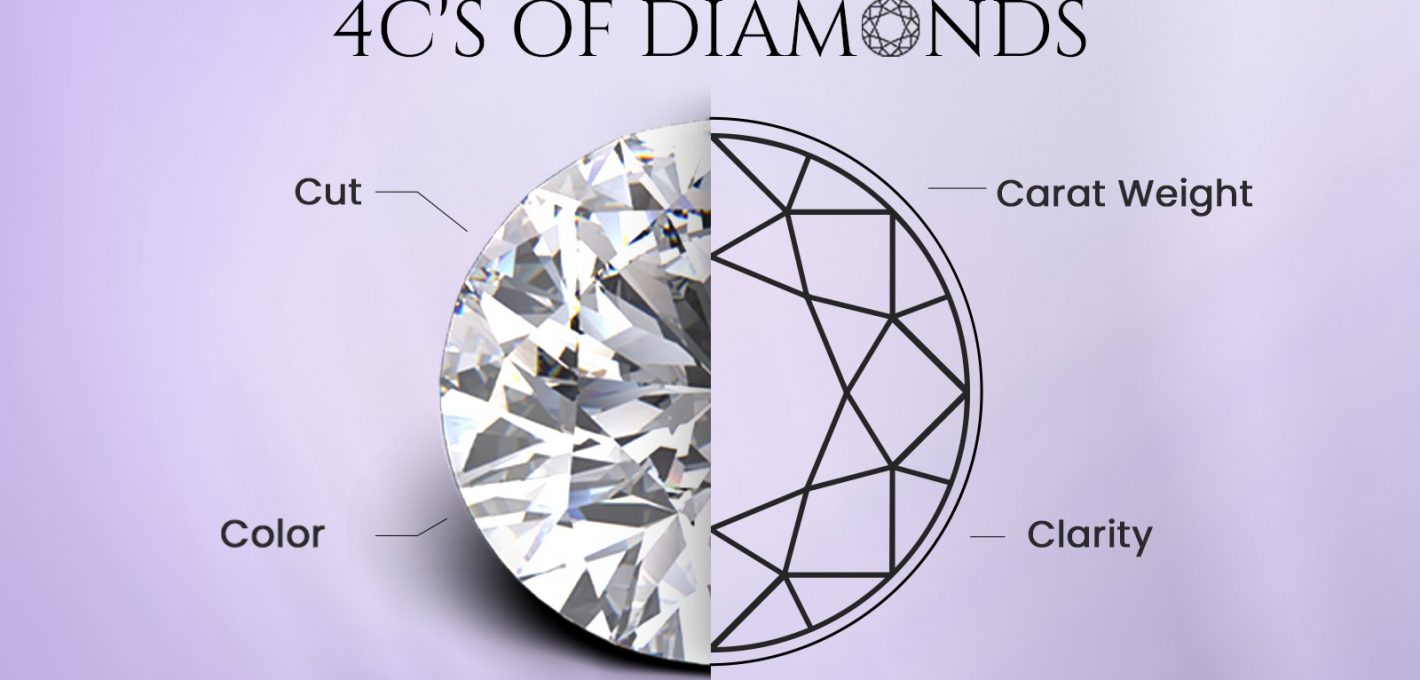
Whether it’s for an engagement, an anniversary, or a personal statement piece, buying a diamond ring is a major outlay of money. But given the abundance of choices available, how can you be sure you are obtaining the finest quality for your means? That’s where the 4Cs—Cut, Color, Clarity, and Carat weight—come in. The beauty, uniqueness, and general worth of a diamond are decided by these four elements. Understanding them thoroughly will enable you to decide the next time you are looking for diamond rings with knowledge.
1. Cut: The Sparkle Factor
The most important of the four Cues since it directly influences the brilliance of a diamond. Perfectly reflecting light, a well-cut diamond produces that distinctive glitter.
The Science Driving the Shine
To enhance their light reflecting power, diamonds are cut with exact angles and dimensions. A diamond seems dull if its cutting depth is either too shallow or too deep since light leaves the sides or bottom. But a well-cut diamond reflects and captures light in a way that generates maximum fire and brilliance.
Grades Cut Clearly
- Perfect cut that maximizes light reflection and sparkle.
- Though at a less price point, almost as dazzling as Excellent.
- Good: lacks the same fire but reflects a fair quantity of light.
- Fair/Poor: The diamond seems dead as light leaks out.
Always give cut top priority if you are deciding between size and sparkle; it is what makes a diamond really shine.
2. Colour: The Whiteness Scale
In diamonds, color really describes the presence of yellow or brown tones. A diamond is rarer and more expensive the closer it approaches being colorless.
Diamond Color Grading
From D (fully colorless) to Z (visible yellow or brown tint), diamonds are ranked. You should know as follows:
- D-F, or colorless, diamonds are the most costly, rarest, and highest-quality stones.
- G-J (Near Colorless): Excellent mix of price and look; only experts will find slight hue apparent.
- K-M (Faint Colour): Noticable tint; more reasonably priced.
- N-Z, or noticeable color: brown or yellow tones seen with the unaided eye.
If you are setting your diamond in yellow or rose gold, you could choose a somewhat lower color grade (such as G-H) without compromising attractiveness since the warm metal tones disguise minor hues.
3.Clarity: Defects and Inclusions
Clarity gauges blemishes (surface faults) and internal flaws (inclusions). Although most diamonds contain flaws, their value increases with less of them.
Clarity Grading Scale
- Very rare—no internal or exterior flaws—FL (Flawless)
- If internally flawless—that is, if there are just superficial imperfections—then
- Very, Very Slightly Included: VVS1-VVS2 inclusions hardly seen with 10x magnification.
- Very Slightly Included: Small inclusions seen under magnification but not to the unaided sight.
- SI1–SI2 (Slightly Included): Inclusions may be seen without magnification.
- I1–I3 (Included): Clearly visible flaws can compromise endurance.
Often a wonderful choice is a VS1 or VS2 diamond since imperfections are minuscule and have no effect on look. An eye-clean SI1 or SI2 diamond might still look amazing even on a budget.
4. Carat: The Scale Element
Carat is the weight of the diamond, not its dimensions. Although larger diamonds are more costly and rarer, a high-carat diamond with poor cut and clarity will not be as brilliant as a smaller, well-cut diamond.
Grasping Diamond Sizes
- Delicate, perfect for understated designs, 0.25 to 0.50 carats
- Popular choice for engagement rings is 0.75 – 1.0 carat.
- 1.5 – 2.0 carats: Clearly big, balancing quality with size.
- 2.5+ carats: Usually a statement item, luxuriant.
Choose a diamond with a great cut and a somewhat elongated form, such as an oval or pear, if you wish a larger-looking diamond without paying for a high carat weight.
Final Thoughts: Selecting the Correct Diamond
Think on which of the four Cs most important to you when selecting a diamond ring. If glitter comes first, concentrate on cutting. If you desire a bigger diamond within your means, think about a lower color or clarity grade but still keeping a decent cut. Knowing these elements guarantees you the ideal diamond for your budget—one that is not only priceless but also remarkably attractive.
Knowing the 4Cs will enable you to make a wise decision that will shine brilliantly for a lifetime whether your search is for an engagement ring or a timeless piece for yourself.