

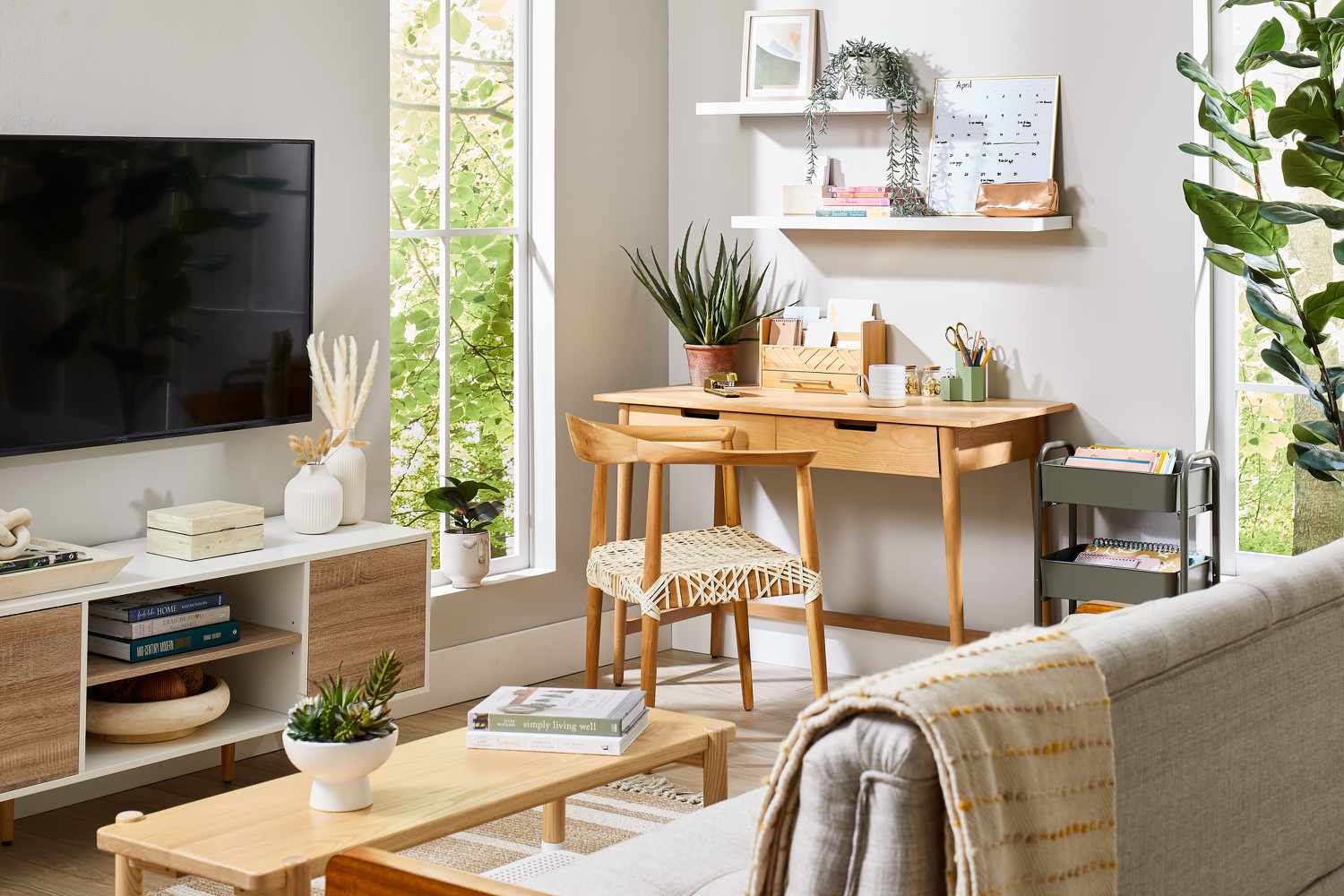
Fitting a computer table and a coffee table into one living room sounds hard. Most people think they have to choose one or the other. They don’t. You can keep both. You just have to place them with some sense.
The problem is that these two tables do different things. The computer table is for work and study. The coffee table is for sitting, snacking, and talking. Put them in the wrong spot and the room feels cramped. Put them in the right spot and even a small room works fine.
Start by Doing Nothing
Sounds odd, but it’s true. Before you move a single chair, just sit in the room for a while. Watch where the sun comes in. Notice how people walk from the door to the sofa. See which corner stays empty all day. That empty corner is gold. Most homes waste their corners and then complain about space.
Ask yourself a few plain questions:
- How many people use the room each day.
- Where does the laptop actually get used.
- Is there a plug close to that spot.
- Where do guests naturally sit.
The answers tell you more than any rule book.
The Computer Table Wants a Wall or a Corner
Keep the computer table off the middle of the floor. Shove it against a wall if you can. The middle is for walking, not for a desk. A wall spot also gives you a bit of quiet when others are around.
A corner works even better if the wall is full. Corners are cheap space. You’re not using them anyway. Tuck the computer table there and the rest of the room stays open.
Try to keep it near a window. Daylight helps the eyes and the mood. But don’t let the sun hit the screen straight on. Then you’ll squint the whole time.
The Coffee Table Stays Close to the Sofa
This one belongs in front of where you sit. Not too close, or you’ll keep bumping it. Not too far, or you’ll stretch for your cup. About two feet between the sofa and the table is a good gap. You should be able to walk past it without turning sideways.
Keep the Two Tables Apart
Here is a mistake people make all the time. They push the computer table and the coffee table next to each other. The room then looks like one big block of wood. Don’t do that. Give each table its own zone. Work on one side. Rest on the other. Your mind settles when the two jobs don’t mix.
Size and Height Are Not Small Details
A big table in a small room is a headache. If space is tight, get a slim computer table. A round coffee table takes less room than a square one. Light colours make the floor look bigger. Dark heavy wood can swallow a small space.
Check the height with your own body. Sit at the computer table. Your back should be straight. Your arms should rest without lifting. The coffee table should sit a little lower than the sofa seat. Then a plate or a glass sits easy.
Storage Keeps the Mess Down
Lots of computer tables come with a shelf or two. Use them for chargers and papers. Keep the top almost empty. For the coffee table, a small tray holds the remote and the little stuff. Without the tray, it turns into a dump spot by evening.
Light Changes Everything
A lamp on the computer table helps at night. A soft light near the coffee table keeps the room warm. Don’t leave it dark. A dim room feels smaller than it is.
Clean It Daily, Not Weekly
A clear table makes a clear room. Put things back when you’re done. Wipe both tables. Throw the old papers. Do this every day and the living room stays calm. Skip it for a week and the clutter returns.
A Few Quick Tricks
- A soft rug under the coffee table marks the rest area.
- A small plant near the computer table adds some life.
- Boxes under the table hide the wires.
- Switch the computer off when friends come. The work corner then feels like home.
You don’t need a big house. You need a plan. Wall or corner for the computer table. Sofa front for the coffee table. Room to walk. Right size. A little cleaning each day. Do these and the same room does work and fun at once. A small space can still feel open.