

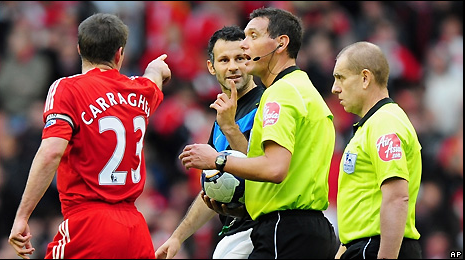
The controversial red card shown to Manchester United defender Lisandro Martinez has sparked widespread debate across football communities and expert panels. The incident occurred during a crucial Premier League match where Manchester United suffered a narrow defeat against Leeds United.
Growing Debate Around Manchester United Dismissal Incident
Initially unnoticed by the referee, the situation escalated after VAR intervention prompted a detailed review of the on-field altercation. Following a pitchside monitor check, the referee determined that Martinez had committed violent conduct by pulling an opponent’s hair, resulting in an immediate dismissal.
This decision quickly became the central talking point after the match, with analysts questioning whether the punishment matched the nature of the incident. Many observers argued that the action lacked the aggression typically associated with red card offenses in professional football.
Carragher Strongly Opposes The Refereeing Interpretation
Former Liverpool defender and football pundit Jamie Carragher openly criticized the decision, describing it as excessively harsh given the context of the situation. He emphasized that football should not rely solely on rigid rule enforcement without considering the natural flow of physical interactions during matches.
Carragher argued that most players, coaches, and supporters watching the incident would not interpret it as deserving of a red card sanction. He stressed that football remains a contact sport where minor physical exchanges should not automatically be escalated into serious disciplinary actions.
According to his analysis, the use of slow-motion replays can exaggerate incidents and create misleading impressions that influence refereeing decisions. He suggested that officials should apply greater contextual understanding instead of relying heavily on isolated visual evidence.
Carragher highlights issues with VAR influence
Carragher raised concerns about the growing influence of VAR in shaping refereeing outcomes, particularly in borderline situations involving minimal physical contact. He noted that repeated slow-motion analysis can distort the perception of intensity and intent behind player actions.
He further explained that decisions made under these conditions risk undermining the natural rhythm of the game, which traditionally allows for a degree of physical contest. This perspective reflects a broader concern among football experts regarding the balance between technology and human judgment.
Michael Carrick Shares Similar Frustration Over Decision
Manchester United’s manager Michael Carrick also expressed strong dissatisfaction with the red card, labeling it a shocking interpretation of the situation. From his viewpoint, the incident involved a natural reaction during physical contact rather than deliberate misconduct.
Carrick explained that Martinez appeared to be attempting to maintain balance after being challenged, which led to incidental contact with the opponent’s hair. He insisted that there was no clear intent to cause harm or gain an unfair advantage during the interaction.
This interpretation aligns with the argument that football situations often involve complex physical dynamics that cannot always be accurately judged through isolated video replays. Carrick emphasized the importance of considering the sequence of events rather than focusing solely on the final moment.
The dismissal of Martinez created immediate tactical difficulties for Manchester United, forcing the team to continue the match with a numerical disadvantage. This significantly impacted their ability to recover after conceding early goals in the game.
In addition to the immediate match consequences, the red card carries a suspension that could affect several upcoming fixtures. Losing a key defender during a critical phase of the season places additional pressure on the team’s overall defensive structure.
The Role Of VAR In Modern Football Decisions
The incident highlights the ongoing debate surrounding VAR and its role in modern football decision-making processes across major competitions. While the technology was introduced to improve accuracy, it has also generated controversy regarding its application in subjective situations.
VAR operates by reviewing incidents that may involve serious fouls, penalties, or mistaken identity, but its interpretation still relies on human judgment. This combination of technology and subjective analysis creates potential inconsistencies in how rules are applied across different matches.
Critics argue that VAR should be used to correct clear and obvious errors rather than reinterpreting marginal incidents that could be considered part of normal gameplay. Supporters, however, believe that the system enhances fairness by ensuring that all significant actions are properly reviewed.
Challenges in interpreting physical contact
One of the main challenges highlighted by this incident is determining the threshold for what constitutes violent conduct in football. Physical contact is an inherent part of the sport, making it difficult to distinguish between accidental actions and intentional fouls.
Slow-motion footage often amplifies movements that appear minor in real-time, leading to decisions that may not reflect the original intensity of the situation. This discrepancy has become a key point of criticism among players, coaches, and analysts.
Broader Implications For Refereeing Standards
The controversy surrounding Martinez’s red card raises broader questions about refereeing consistency and the application of rules across different competitions. Inconsistent decisions can create confusion among players and reduce confidence in officiating standards.
Experts have suggested that clearer guidelines are needed to ensure that similar incidents are judged consistently regardless of the match context or officiating team. This would help maintain fairness and improve overall trust in the decision-making process.
Additionally, there is growing discussion about the need for referees to consider the spirit of the game rather than applying rules in a strictly literal manner. Balancing technical accuracy with practical understanding remains a significant challenge in modern football.
The importance of contextual judgment
Contextual judgment involves evaluating the intent, intensity, and overall situation surrounding an incident rather than focusing solely on the final action. This approach allows referees to make more balanced decisions that align with the nature of the sport.
By incorporating context into decision-making, officials can better distinguish between genuine misconduct and incidental contact that occurs during competitive play. This perspective is increasingly supported by former players and analysts who understand the dynamics of the game.
Conclusion
The controversy surrounding Lisandro Martinez’s red card has reignited debates about VAR influence, refereeing standards, and the interpretation of physical contact in football. Opinions from figures like Jamie Carragher and Michael Carrick highlight the growing concern over overly strict decisions in modern matches.
As football continues to evolve with technological advancements, finding the right balance between accuracy and fairness will remain essential. The incident serves as a reminder that maintaining the spirit of the game is just as important as enforcing its rules.