

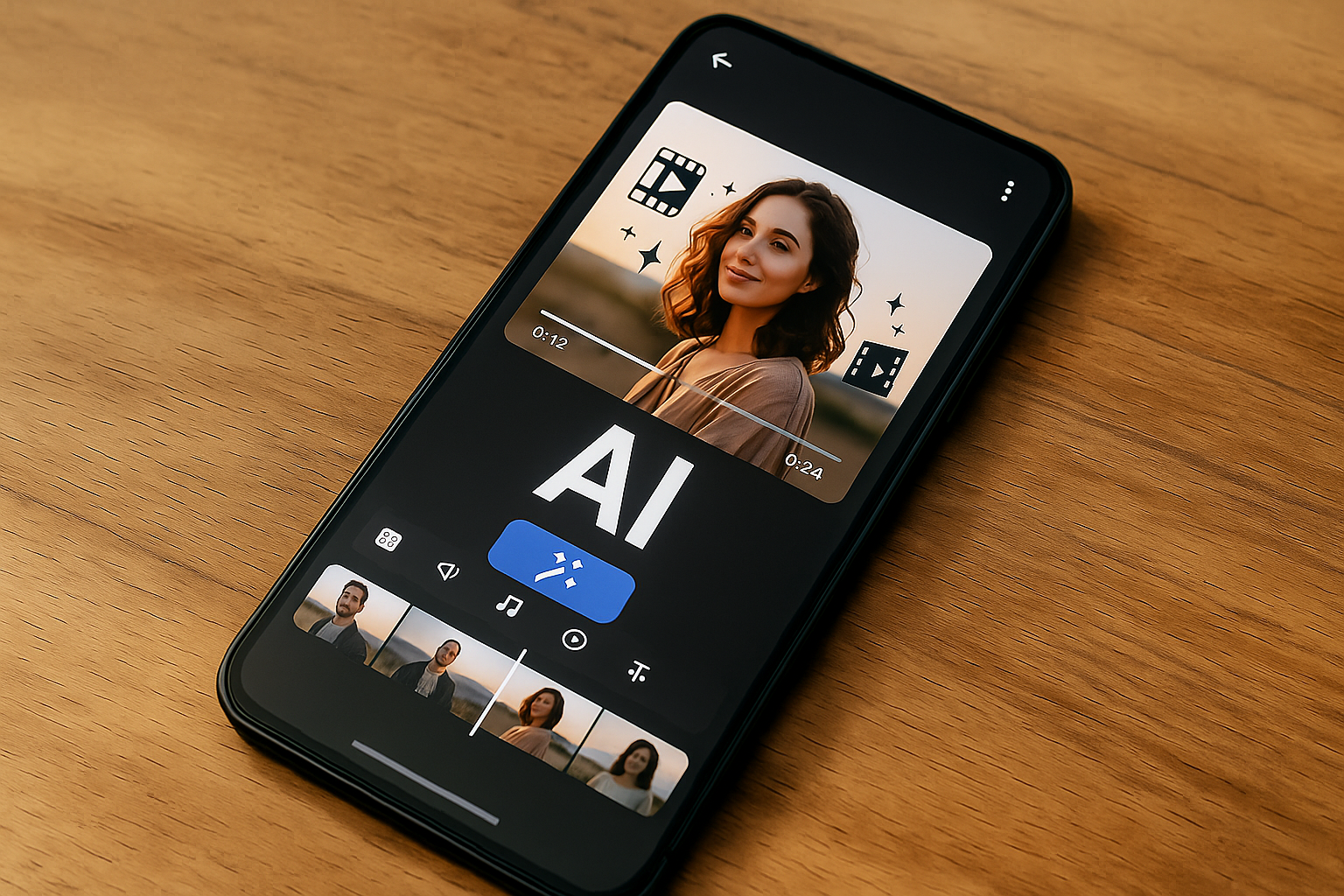
Creating a video can take hours of filming, searching for footage, and editing. For small businesses and independent creators, producing enough video content to keep up with social media and marketing demands can be difficult.
AI video generation offers another way to create content. With a text prompt or an existing image, users can generate original footage without filming every scene themselves.
But how does this technology work, what can it create, and why is it becoming an important part of video production?
What Is AI Video Generation?
AI video generation uses artificial intelligence to create or modify video footage from text, images, videos, and other reference materials.
Unlike traditional video editors, which mainly work with existing footage, AI video generators can create entirely new scenes and movements. Rather than simply zooming into a landscape photo, AI can add flowing water, moving clouds, and wind blowing through trees.
Some AI tools generate individual video clips, while others turn scripts into complete videos by combining footage, narration, music, and subtitles. Understanding this difference is important when choosing a tool for a particular project.
How Does AI Video Generation Work?
AI video models learn relationships between visual appearance, language, and movement by training on large collections of images and videos. Several technologies contribute to this process.
Natural Language Processing
When users enter a prompt, the system converts the description into information that guides video generation. Details such as the subject, action, setting, lighting, and camera direction influence the final result.
Computer Vision
Visual processing helps models extract information about objects, people, colors, shapes, and composition from reference images or videos. This allows an uploaded photo to guide the appearance of a generated scene.
Generative AI Models
Many video generators use diffusion transformers to create visual content. The generation process gradually transforms noise into a sequence of connected images.
Unlike image generation, video generation must also account for changes over time. Objects need to retain their appearance as they move, and scenes should remain consistent as the camera changes position.
AI Audio and Lip Sync
Some models generate dialogue, sound effects, and environmental sounds alongside video. Avatar generators can also combine synthetic speech with synchronized facial movements to create digital presenters.
Common Types of AI Video Generation
Text-to-Video
Text-to-video creates original footage from written descriptions. Users can specify characters, environments, actions, and camera movements without providing existing footage. It is useful for fictional scenes, advertisements, and creative concepts.
Image-to-Video
Image-to-video adds movement to photographs, illustrations, and product images. Starting with an existing image gives users more control over the subject’s appearance and initial composition. Common uses include product showcases, photo animation, and character videos.
Video-to-Video
Video-to-video uses existing footage as a reference. Depending on the model, users can change the visual style, replace backgrounds, modify characters, or transform recorded footage into animation.
AI Avatar Videos
Avatar generators create videos featuring digital presenters who deliver written scripts. They are commonly used for tutorials, business presentations, product explanations, and multilingual content.
Multi-model platforms such as Lanta AI bring different AI video models together, allowing creators to generate footage from text and images without switching between several platforms.
Why AI Video Generation Matters
Lower Video Production Costs
Traditional video production may involve equipment, actors, locations, and production teams. AI-generated footage can reduce some of these expenses, particularly for short advertisements and supplementary scenes.
Businesses still need to account for generation credits, revisions, and editing, but they have more options when working with limited budgets.
Faster Content Production
Searching stock footage libraries or organizing a new shoot can slow down a project. AI allows creators to generate specific scenes based on their content requirements.
Marketing teams can also test different visual concepts before deciding which direction to pursue, reducing the need for repeated filming.
A Lower Barrier to Video Creation
Not everyone has experience with photography, animation, or professional editing software. AI video generators make it possible to begin with a written idea or photograph rather than a collection of recorded footage.
Although producing polished videos still requires creative judgment, the initial production process becomes more accessible.
More Content from Existing Assets
A collection of product photographs can become the basis for several promotional videos. Illustrations can be animated, and existing brand visuals can be adapted for new campaigns.
This is particularly valuable for businesses and creators who need to publish regularly but have limited time to produce new material.
Greater Creative Freedom
Some scenes are difficult or expensive to produce with traditional filming. Fantasy environments, futuristic cities, and imaginative visual effects often require extensive production resources.
AI video generation allows creators to explore these ideas without first building physical sets or developing complex animations.
How AI Video Generation Is Being Used Today
AI-generated videos are already being incorporated into different areas of content production.
- Marketing and advertising: Businesses create campaign visuals and test different advertising concepts before investing in full production.
- E-commerce: Retailers animate product photographs to create promotional clips and social media advertisements.
- Social media: Creators produce original footage for YouTube Shorts, Instagram Reels, TikTok, and narrated videos.
- Education and training: Educators use generated illustrations, animations, and digital presenters to explain concepts or develop learning materials.
- Film and animation: Creative teams explore camera angles, environments, and character movements before production begins.
One commercial example is The Points Guy, which used Gemini and Veo 3 to generate travel-themed video advertisements. Google Cloud’s case study reports an 80% reduction in manual video creative work, illustrating how AI can support larger advertising campaigns.
The Limitations of AI-Generated Videos
AI video generation still has several limitations that creators should understand.
- Inconsistent details: Faces, clothing, product features, and backgrounds can change during movement.
- Unnatural motion: Complex physical interactions may produce unrealistic results.
- Limited control: Models do not always follow detailed instructions accurately.
- Variable costs: Several attempts may be needed to obtain usable footage.
- Editing requirements: Longer videos often require additional editing, sound design, and scene organization.
Copyright and authenticity also matter. Commercial usage permission does not automatically guarantee copyright protection. In the United States, copyright protection for AI-assisted works depends on sufficient human creative contribution.
Publishing platforms have their own requirements. YouTube, for example, requires creators to disclose certain realistic AI-generated or altered content.
The Future of AI Video Generation
Recent developments are moving beyond improvements in visual quality. Models such as Google Veo 3.1 already offer native audio, reference-based generation, and expanded creative controls.
Further progress in character consistency, longer video sequences, and precise editing could make AI-generated footage easier to incorporate into professional projects.
The ability to correct individual elements without regenerating an entire scene could also reduce production costs and give creators greater control over their work.
Final Thoughts
AI video generation matters because it changes how people obtain and produce video footage. Businesses can explore more advertising concepts, educators can develop new visual materials, and independent creators can produce scenes that would otherwise be difficult to film.
Rather than replacing traditional video production entirely, AI video generator is becoming another part of the creative process.