

Routine dental restorations used to mean long waits, repeat visits, and guesswork. Today, 3 D printing changes that. You see faster treatment, fewer surprises, and results that match your teeth with sharp accuracy. This technology shapes crowns, bridges, and dentures in hours instead of weeks. It also helps your dentist plan your care before you sit in the chair. As a result, you spend less time in pain and less time away from work or family. Many offices now use 3 D printing to support cosmetic dentistry in Denton tx, joining medical centers across the country that use the same tools for patient care. This blog explains how 3 D printing fits into everyday dentistry, what it means for your comfort, and how it can protect your teeth over time. You deserve clear facts so you can choose treatment with confidence.
What 3 D Printing Means For Your Dental Visits
3 D printing in dentistry is simple. A digital scanner records your teeth. A computer program designs the piece you need. A printer builds that piece layer by layer from ceramic, resin, or metal.
This process changes your visit in three clear ways.
- You need fewer appointments
- You get a closer fit on the first try
- You wait less time for relief when a tooth breaks or hurts
Traditional methods depend on molds, mail, and hand shaping. Each step adds time and room for mistakes. With 3 D tools, your dentist can see a clear digital model of your teeth and adjust the design before anything touches your mouth.
From Molds To Models: How The Process Works
Here is how a routine restoration usually works when a clinic uses 3 D printing.
- Digital scan. A small camera moves around your teeth and records images. You keep your mouth open for a short time. No putty trays. No gagging.
- Computer design. The dentist or technician designs your crown, bridge, or denture on a screen. You can often see the model and ask questions.
- On site printing. A 3 D printer builds the piece in the office. Some crowns are ready the same day.
- Fitting and bonding. The dentist checks the fit, smooths rough spots, and bonds the piece to your tooth or places it in your mouth.
The National Institutes of Health describes this shift toward digital dentistry as a core change in how restorations are planned and made. You can read more background in this review from the National Library of Medicine at https://www.ncbi.nlm.nih.gov/pmc/articles/PMC6768815/.
How 3 D Printing Compares To Traditional Methods
The table below shows common differences you may notice between traditional methods and 3 D printing during routine care.
| Feature | Traditional Restorations | 3 D Printed Restorations
|
|---|---|---|
| Number of visits for a single crown | Usually 2 to 3 visits | Often 1 visit |
| Time between visits | 1 to 3 weeks with a temporary crown | Same day or within a few days |
| Impression process | Putty tray in mouth | Digital scan with a small camera |
| Fit adjustments | More grinding and reshaping in the chair | Less adjustment because design is precise |
| Lab shipping | Yes. Molds or models mailed to a lab | No. Many pieces made in office |
| Record keeping | Paper charts and stone models | Digital files that can be reused |
Every clinic is different. Yet the pattern is clear. Digital tools cut out steps that cause delay and discomfort.
Benefits For Comfort, Safety, And Family Life
3 D printing does more than speed. It changes how you feel before, during, and after care.
- Less time in the chair. Shorter visits mean less strain on your back and jaw. Children and older adults often handle these visits with less stress.
- Fewer shots and numbing sessions. If your crown or bridge is ready the same day, you may only need one round of numbing.
- Better bite and speech. A closer fit helps you chew with less worry. It also helps dentures feel more stable during talking and eating.
- Stronger records after accidents. If you chip or lose a tooth later, your dentist can use your past scans to plan repair work faster.
The Centers for Disease Control and Prevention stresses the cost of missed school and work from dental pain and untreated tooth decay. You can see data at https://www.cdc.gov/oralhealth/fast-facts/index.html. When your care needs fewer visits and less healing time, you protect your schedule and your income.
Common 3 D Printed Dental Restorations
You may already know someone with a 3 D printed dental piece. Common examples include three groups.
- Crowns and onlays. These protect cracked or worn teeth. 3 D printing helps match the shape and shade of your natural teeth.
- Bridges and partial dentures. These fill spaces from missing teeth. Printed parts can match your gum line and bite with close detail.
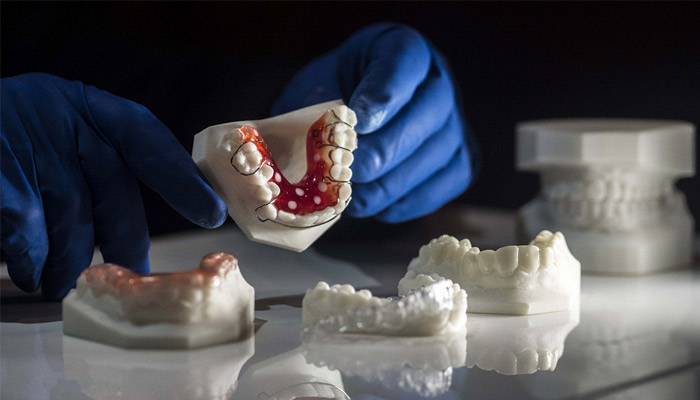
- Clear aligner models and night guard molds. Many orthodontic trays and bite guards start with 3 D printed models that shape the plastic.
These tools help both routine care and cosmetic changes. Many people use them to fix chewing problems and also change the look of their smile.
What This Means For Your Family
For families, 3 D printing can ease many common worries.
- You can plan fewer trips and miss less work and school.
- Your children may feel less fear because the process uses scanners instead of trays.
- Older family members with dentures can get a more stable fit and shorter adjustment time.
Modern dentistry can feel cold or rushed. Digital tools can do the opposite when used well. They give your dentist more time to talk with you because machines handle many slow steps in the background.
Questions To Ask Your Dentist
You do not need to be a technology expert. You only need clear questions. You can ask your dentist three simple questions.
- Do you use digital scans and 3 D printing for crowns, bridges, or dentures
- Can any of my needed restorations be done in one visit
- How do you store my digital records if I need new work later
If your clinic does not use 3 D printing, you can ask how they work with outside labs and what time frame to expect. The goal is honest planning, not pressure.
Taking Your Next Step With Confidence
Dental problems create fear, shame, and anger. You might worry about cost, time, or pain. 3 D printing does not erase those concerns. It does give you more control.
You can expect shorter waits, fewer visits, and restorations that look and feel more natural. You can protect your family schedule and reduce the shock of sudden dental trouble.
The next time you face a needed crown, bridge, or denture, ask how 3 D printing fits into your care. Clear facts and modern tools help you protect your teeth with less chaos and more calm choice.