

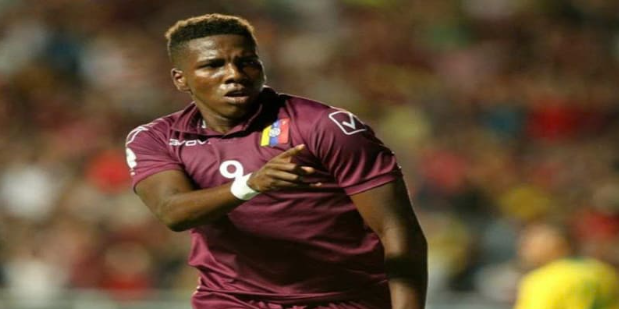
Jan Carlos Hurtado has experienced demanding football environments across South America and Europe, developing his game against different defensive systems. The Venezuelan striker combines physical presence with attacking movement, although his effectiveness depends heavily on positioning and decision-making inside crowded areas, see more at 7m live now!
Jan Carlos Hurtado – From Venezuelan Football to a New Challenge in Greece
Born on March 5, 2000, in El Cantón, Venezuela, the forward entered professional football before establishing himself in Argentina. His performances for Gimnasia La Plata attracted attention because he could compete physically while operating against experienced central defenders.
Boca Juniors subsequently recruited him in 2019, providing an opportunity to experience considerable expectations at a major Argentine club. However, competition for attacking positions meant that consistent playing time remained an important challenge throughout his early development.
A subsequent spell at Red Bull Bragantino exposed Jan Carlos Hurtado to Brazilian football, where transitional attacks demand quick decisions. The striker experienced different tactical arrangements, including situations requiring him to occupy defenders and create space for supporting midfielders.
His return to Gimnasia provided another opportunity to compete in Argentina before a significant move across the Atlantic. In January 2026, Greek club Volos announced his arrival on a two-and-a-half-year agreement, extending his professional journey into Europe.
| Career Detail | Verified Information |
| Date of birth | March 5, 2000 |
| Birthplace | El Cantón, Venezuela |
| Nationality | Venezuelan |
| Height | Approximately 1.83 metres |
| Primary position | Centre-forward |
| Argentine clubs | Gimnasia La Plata, Boca Juniors |
| Brazilian club | Red Bull Bragantino |
| Club since January 2026 | Volos |
| Volos contract | Through June 2028 |
| International representation | Venezuela |
According to Volos’s official announcement, Carlos Hurtado had previously recorded eight goals across 79 Brazilian top-flight appearances. The club also highlighted his experience with Gimnasia and Boca Juniors when introducing its new attacking signing.
Understanding His Influence During Different Attacking Phases
Assessing Jan Carlos Hurtado requires examining what happens before a striker shoots, particularly when defenders restrict his immediate passing options. Three recurring situations reveal how his positioning can either support an attacking structure or leave teammates without useful connections.
Occupying Central Defenders Without Sacrificing Useful Passing Angles
- A centre-forward must establish a clear receiving position between opposing defenders while maintaining enough separation to control incoming passes.
- When defenders step forward aggressively, the striker should recognize whether dropping deeper creates space for another attacker behind them.
- Jan Carlos Hurtado can use his physical presence to occupy a central defender while supporting teammates advance into better positions.
- Holding an opponent in place becomes valuable when attacking midfielders are preparing runs through the spaces between defensive lines.
- If both defenders remain compact, the forward should adjust his movement instead of waiting passively for an unlikely delivery.
- Effective positioning gives the passer several realistic options and prevents the attacking formation from becoming excessively narrow or predictable.
Competing for Aerial Deliveries Against Physically Strong Defensive Opponents
- During long attacking sequences, a striker should anticipate the delivery’s trajectory before attempting to establish an advantageous jumping position.
- Successful aerial challenges depend on timing, body orientation, and awareness of defenders rather than relying exclusively on height.
- When Jan Carlos Hurtado receives a high delivery, his first objective should match the position of nearby supporting teammates.
- A controlled header toward a midfielder may preserve possession when attempting an immediate shot offers little realistic scoring probability.
- Inside the penalty area, the striker must attack available space without initiating unnecessary contact that could invalidate an opportunity.
- Tracking second balls after an aerial duel allows the forward to remain involved even when the initial challenge fails.
Selecting Finishing Options Under Immediate Pressure Inside the Box
- When receiving near the penalty spot, the striker should identify goalkeeper positioning before selecting power, placement, or another touch.
- A defender closing from behind changes the available shooting angle and may make an immediate first-time finish more appropriate.
- Jan Carlos Hurtado needs controlled body positioning when meeting low crosses because rushed contact frequently reduces shooting accuracy.
- If a goalkeeper narrows the angle, the forward should assess whether a supporting teammate has a better finishing opportunity.
- Rebounds require anticipation and continued movement because defenders often react immediately after the goalkeeper makes an initial save.
- Reliable finishing depends on repeating sound decisions across matches rather than judging technical quality through one exceptional attempt.
The Responsibilities That Determine His Long-Term Attacking Value
For Jan Carlos Hurtado, goals remain an essential measure, yet coaches also require consistent contributions when their team lacks possession. His development therefore depends on coordinated pressing, effective combination play, and measurable improvement against organized defensive opponents.
Initiating Coordinated Pressing Against Defenders Building From Deep Positions
- When opponents restart possession through their goalkeeper, the striker should approach from an angle that restricts central passing routes.
- Pressing becomes more effective when nearby midfielders move together and prevent defenders from easily finding unmarked receiving options.
- Jan Carlos Hurtado must identify poor first touches before accelerating because pressing without a clear trigger wastes valuable energy.
- Forcing a centre-back toward the touchline can benefit teammates when the defensive structure supports pressure on that side.
- If the first pressing attempt fails, the striker should recover into position rather than continuing an isolated pursuit.
- This responsibility matters during difficult matches because disrupting construction can reduce the number of dangerous attacks his defenders face.
Connecting Midfield Runners Through Controlled Layoffs and Short Combinations
- A striker receiving with his back toward goal must recognize midfield runners before the ball reaches his feet.
- Short layoffs can accelerate an attack when defenders focus on the central forward and leave space behind their shoulders.
- In these exchanges, Jan Carlos Hurtado should prioritize accurate passing weight so teammates can maintain forward momentum without hesitation.
- A deliberate movement toward either channel may open central space for attacking midfielders approaching the opposition’s defensive line.
- When teammates cannot advance, protecting possession becomes preferable to attempting an ambitious pass into a heavily defended area.
- Consistent combination play allows a team to sustain attacks even when the centre-forward receives relatively few direct shooting chances.
Measuring Improvement Beyond Goals and Isolated Match Highlights Alone
- Analysts should examine shot quality alongside scoring totals because different attacking systems provide forwards with unequal opportunities inside the box.
- The number of successful layoffs indicates whether a striker can help midfielders progress possession under pressure from defenders.
- For Jan Carlos Hurtado, aerial duel outcomes offer additional evidence about his effectiveness when teammates use direct attacking passes.
- Coaches should also monitor pressing involvement because maintaining defensive intensity becomes increasingly difficult during demanding match schedules.
- Movement into dangerous zones matters even without receiving the ball, especially when those runs create space for teammates.
- Comparing these indicators across several matches provides a stronger assessment than relying on reputation or one productive appearance.
Conclusion
The central question surrounding this forward concerns how consistently his physical attributes translate into useful actions for the team. Jan Carlos Hurtado has already experienced competitive football in Venezuela, Argentina, Brazil, and Greece, providing substantial tactical exposure, see more at 7m now!