

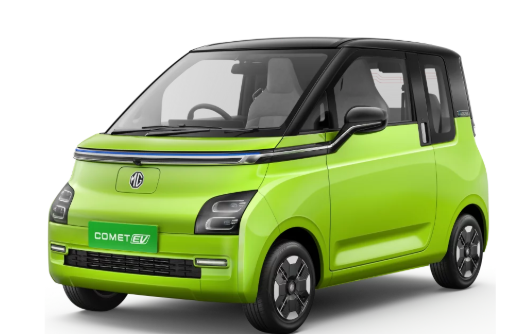
Every EV conversation eventually circles back to range, charging speed, and feature lists. But in real Indian driving—where lanes shrink without warning, parking is negotiated more than allocated, and U-turns can feel like a test of patience—your daily experience is often decided by something simpler: the car’s footprint.
That is why Mg Comet dimensions deserve to be read as a design decision, not a technical footnote. This EV is engineered around the friction points of city India, and its proportions explain why it feels calm in places where larger cars create constant micro-stress. When you evaluate it through the lens of Mg motors, the Comet’s role becomes clear: it is a purpose-built urban tool—compact, predictable, and designed to fit the environment most Indians actually drive in.
Why Dimensions Decide Your Everyday Drive
In Indian cities, a car’s dimensions determine more than how it looks in a brochure. They define what you deal with twice a day: squeezing past parked two-wheelers, aligning into tight spaces, judging mirror clearance, and taking quick turns without needing multiple corrections.
The logic is straightforward. When a vehicle is engineered for dense traffic conditions, small differences in length and turning radius create outsized improvements in usability. This is exactly where Mg Comet dimensions become meaningful. They translate into fewer complicated manoeuvres and less mental load—especially in older neighbourhoods, crowded market roads, and compact residential parking.
From the perspective of Mg motors, it is an intentional positioning move: a compact EV that treats city constraints as the starting point, not the compromise.
Mg Comet Dimensions At A Glance
Here are the measurements that define the Comet’s urban-friendly footprint:
- Overall Length: 2,974 mm
- Width (Excluding Mirrors): 1,505 mm
- Height: 1,640 mm
- Wheelbase: 2,010 mm
- Turning Circle Radius: 4.2 m
If you are comparing compact cars, these figures may look like “numbers on paper.” In practice, they are what decide whether you glide through city life or constantly adjust, reverse, and re-align. This is why Mg Comet dimensions should be considered as functional advantages, not just specifications.
What The Turning Radius Means For City India
The most practical number in this entire set is the turning circle radius: 4.2 metres. In a market where driving space is frequently constrained, that turning ability is the difference known to every city driver: one clean turn versus a frustrating multi-point correction.
Here is how that plays out in everyday conditions:
- Cleaner U-turns: Narrow roads and dividers often force quick decisions. A tighter turning radius reduces the “extra swing” you need.
- Basement ramps feel easier: In tight apartment parking, the ability to take a turn without correcting saves time and reduces risk.
- Less horn pressure: When your car clears a turn quickly, you spend less time blocking the road and attracting impatient traffic behind you.
This is the kind of city advantage that makes a car feel “smart” even without saying anything about technology. It is also a strong example of how Mg motors has approached the Comet: remove friction first, then layer features on top.
How Length Changes Parking Outcomes
A big part of city driving is not driving—it is parking. In many Indian neighbourhoods, parking is not a clean bay with markings. It is a space found between objects. That is where the 2,974 mm length matters.
A shorter overall length changes your outcomes in two ways:
- More usable gaps: You can fit into places where a larger hatchback would hesitate or simply not fit.
- Less overhang anxiety: You can park without leaving your car awkwardly protruding into the lane.
This is why Mg Comet dimensions are especially relevant for people who park in high-pressure environments—street-side gaps, compact societies, or mixed-use areas where space is shared with shops and delivery movement.
From the broader portfolio lens of Mg motors, this aligns with a clear customer promise: make the everyday easier.
Why Width Matters In Tight Lanes
The width listed, excluding mirrors, is 1,505 mm. This detail is crucial because mirror clearance is often the real bottleneck in narrow roads. When you are navigating tight gullies or squeezing past parked scooters, it is the width and mirror confidence that decide whether you move forward smoothly or brake repeatedly.
A compact width supports:
- Better lane comfort: You are less likely to feel “boxed in” on narrow inner streets.
- Reduced scraping risk: Particularly in older areas where road edges and walls are unforgiving.
- More confident gaps: Especially when two-wheelers are filtering around you and space changes moment to moment.
This again reinforces the city-first logic embedded in Mg Comet dimensions—the car is shaped for where you actually drive, not where you imagine you might drive.
Wheelbase And Cabin Practicality
At 2,010 mm, the wheelbase helps explain why the Comet can feel functional as a city car and not merely “small.” A well-used wheelbase supports stability at city speeds and helps intelligently distribute cabin space.
For a compact EV, the wheelbase influences:
- Seating comfort in an urban context: You want passengers to sit without feeling compressed for typical daily trips.
- Predictable handling: Short cars can feel twitchy if the layout is not balanced. Wheelbase helps shape the driving feel.
- Usable interior packaging: The cabin can feel more organised when proportions are designed with intent.
Looking at it through the strategy of Mg motors, the Comet is not just about being compact. It is about being compact without sacrificing comfort or daily usability.
Height, Visibility, And Daily Ease
A height of 1,640 mm supports two practical benefits that are often overlooked:
- Visibility in traffic: A slightly taller stance helps you read the road ahead in typical Indian congestion.
- Comfortable entry and exit: In city usage—frequent stops, short errands, quick pickups—ease of getting in and out matters.
These details can sound minor, but they add up to a car that feels less tiring to use. And that is exactly the point: the Comet’s package is designed to reduce strain. This is consistent with how Mg motors positions the Comet as a city-focused EV rather than a “one car for every scenario.”
Closing Perspective
A good city car does not just save money—it saves effort. The Comet’s footprint is a clear statement: it is designed to fit India’s urban realities rather than fight them. When you view it in the context of Mg motors, you see a deliberate approach: build a compact EV that makes tight spaces feel manageable, and daily driving feel simpler.
If your commute is more lane management than open-road cruising, then Mg Comet dimensions are not merely acceptable—they are precisely what make the vehicle worth considering.